SAND AI | 2024
LEarntech ai
Onboarding & KYC REDESIGN
Designing an AI-Powered Adaptive Learning Platform for Personalized Education at Scale
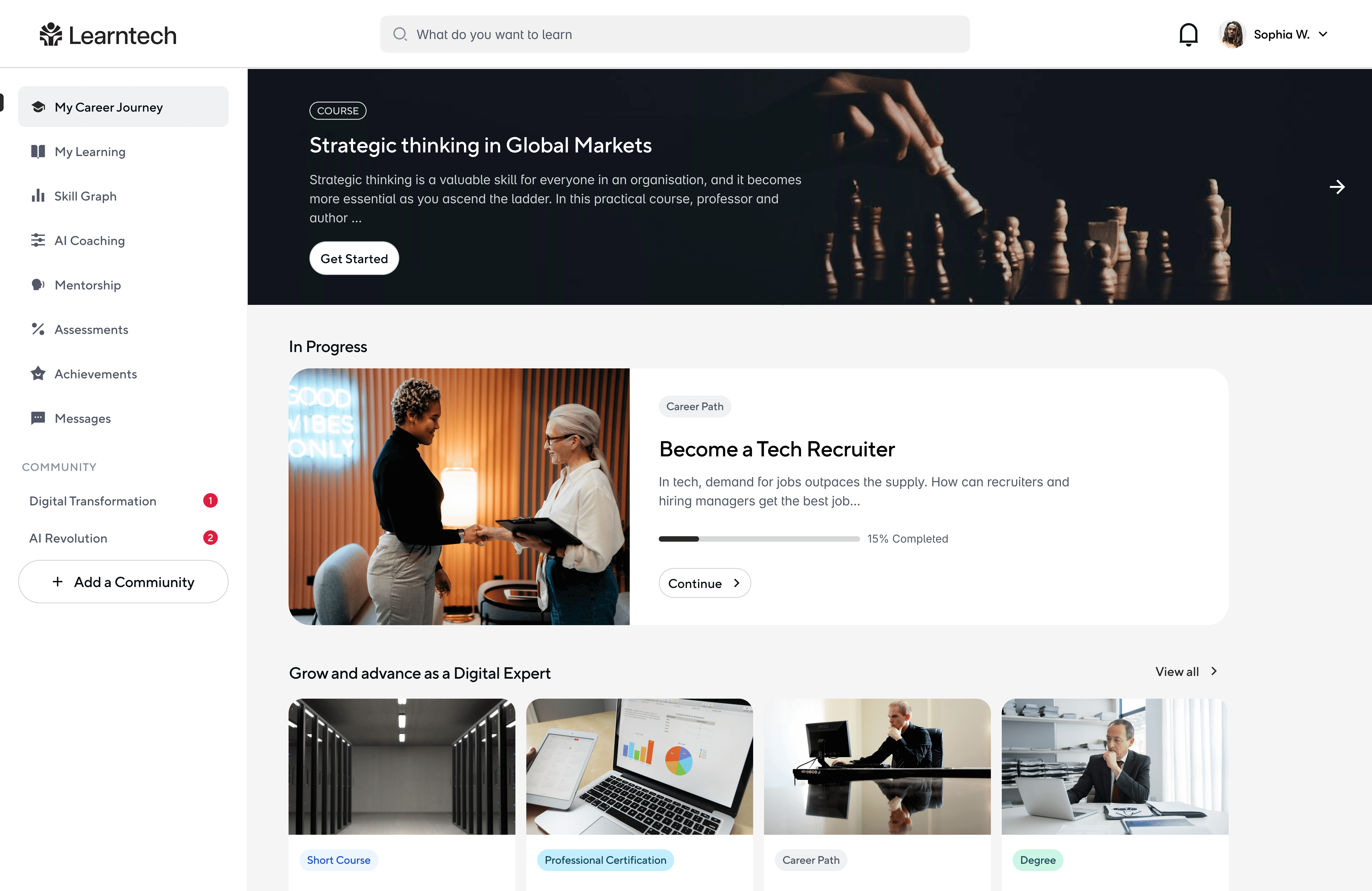
Company & product Context
Learntech is an AI-powered digital learning platform built to deliver deeply personalized educational experiences for learners across different ages, skill levels, and learning goals. Unlike traditional online learning platforms that rely on static courses, Learntech uses adaptive intelligence to continuously tailor learning content, pacing, and guidance to each individual user.
The product combines personalized learning paths, AI coaching, human mentorship, adaptive curriculum delivery, and gamified learning mechanics into a unified learning ecosystem.
My Role & Scope
As the lead product designer, I was responsible for defining the end-to-end product experience, shaping the adaptive learning model from a user perspective, and translating complex AI capabilities into intuitive and motivating interactions that support both learner success and long-term platform engagement.
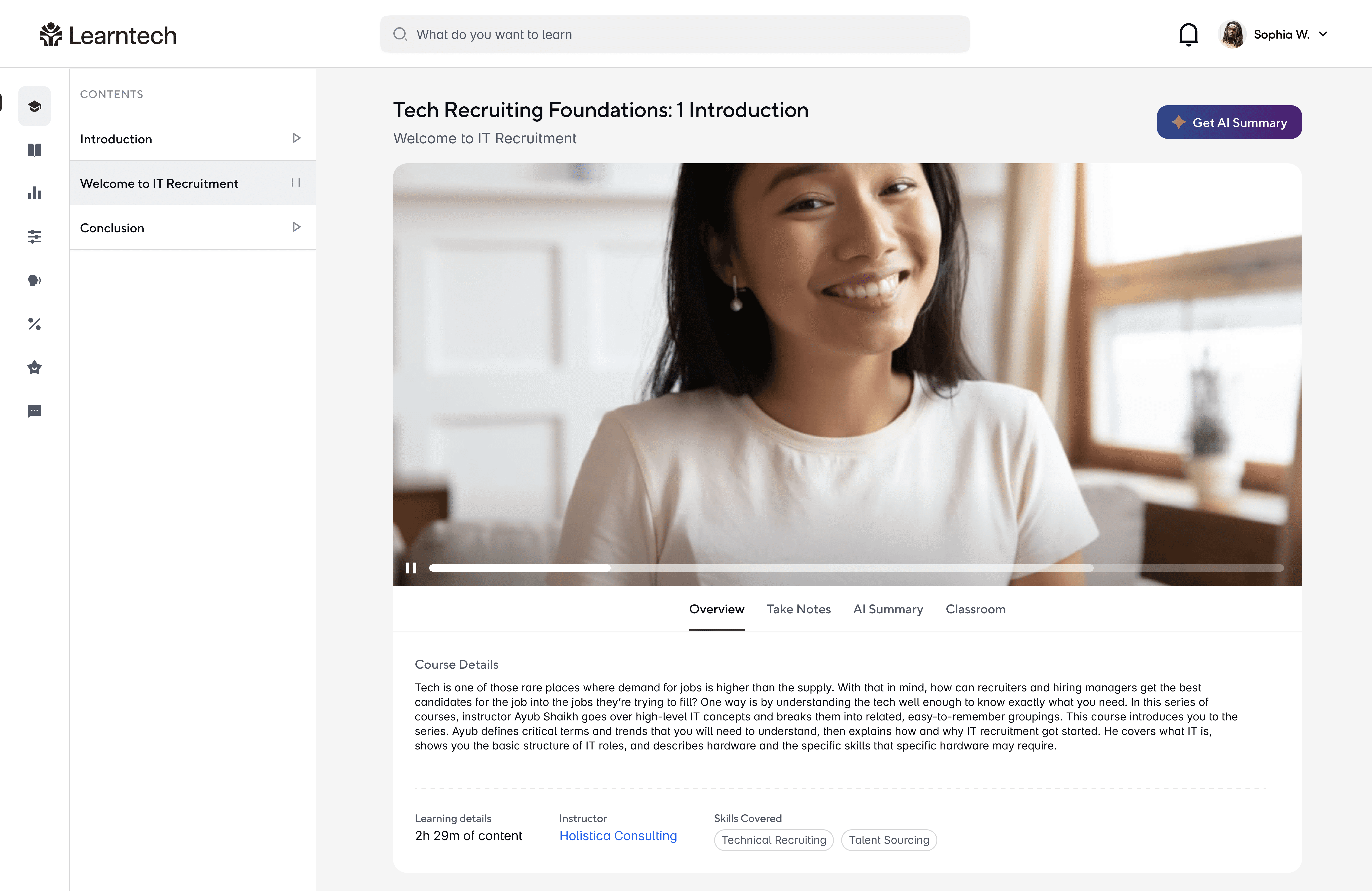
CORE PROBLEM
Most digital learning platforms struggle with retention because they treat learners as a homogeneous audience. Courses are linear, progress is rigid, and users who fall behind or learn differently quickly disengage. Completion rates across online learning products remain low because learners are forced to adapt to the platform instead of the platform adapting to them.
Courses are linear and progress is rigid causing low retention
Completion rates are low because users adapt to platform
Lack of personalization, motivation and sustained progress
No structured guidance for learners
THE DESIGN CHALLENGE
how might we create a learning system that understands each learner, dynamically adjusts learning experiences, and maintains motivation over time while supporting scalable educational delivery?
DISCOVERY FOCUSED ON LEARNING HABITS RATHER THAN COURSE STRUCTURE
Through behavioral research and desk research of habit-formation tools like Habitica, I identified that learners drop off when progress feels unclear, difficulty feels misaligned, or feedback arrives too late. Learners needed immediate reinforcement, adaptive pacing, and a sense of forward momentum.
I mapped learning journeys across beginner, intermediate, and advanced users and discovered that motivation depended heavily on perceived personalization. Users were significantly more engaged when learning felt responsive to their performance rather than predetermined.
key takeaways from QUALITATIVE RESEARCH
Learners drop off when progress feels unclear,
Motivation depended heavily on personalization
Users were significantly more engagung when guided
Educators requested for an opportunity to combine AI with human coaching
EXECUTION
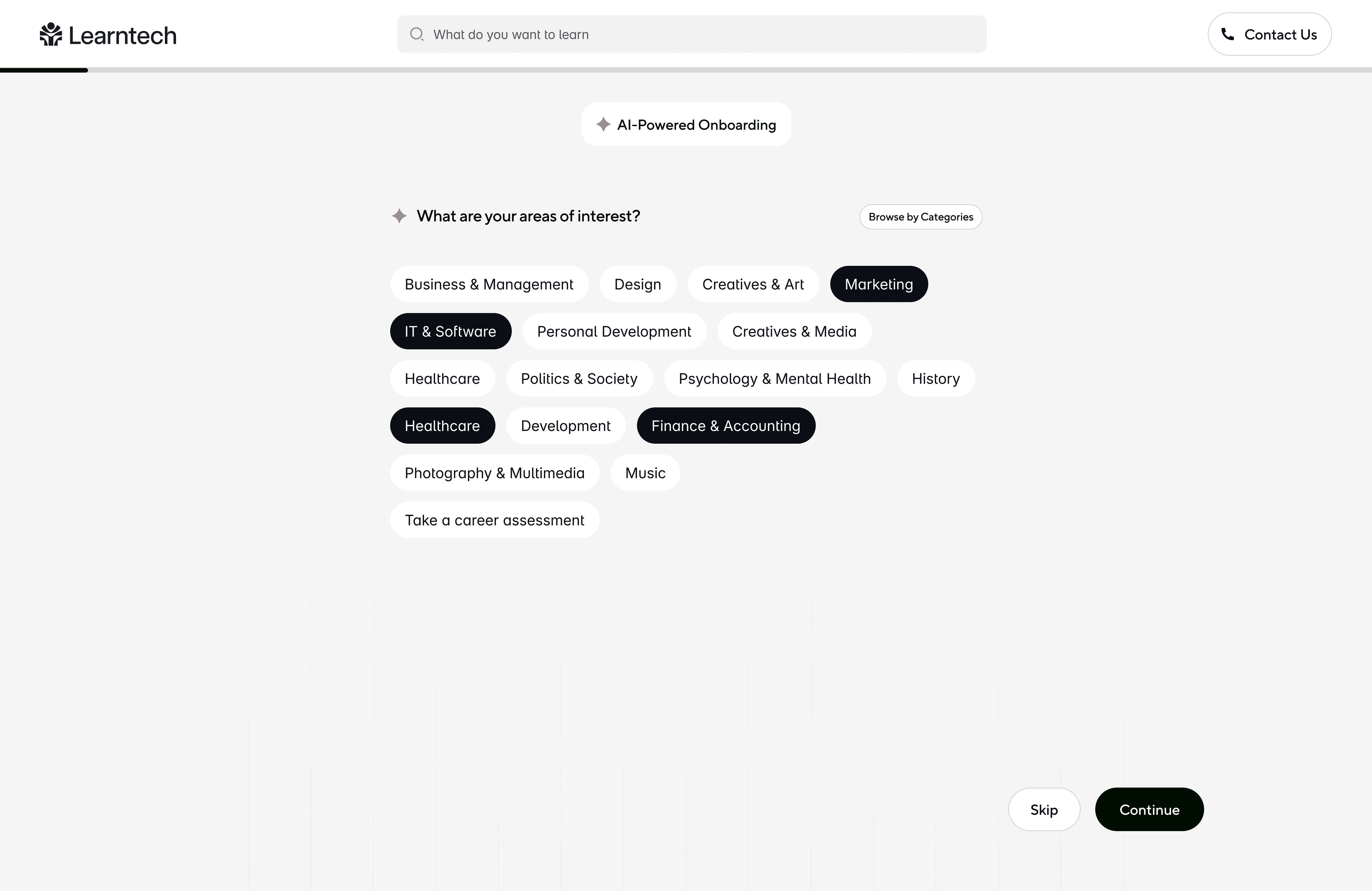
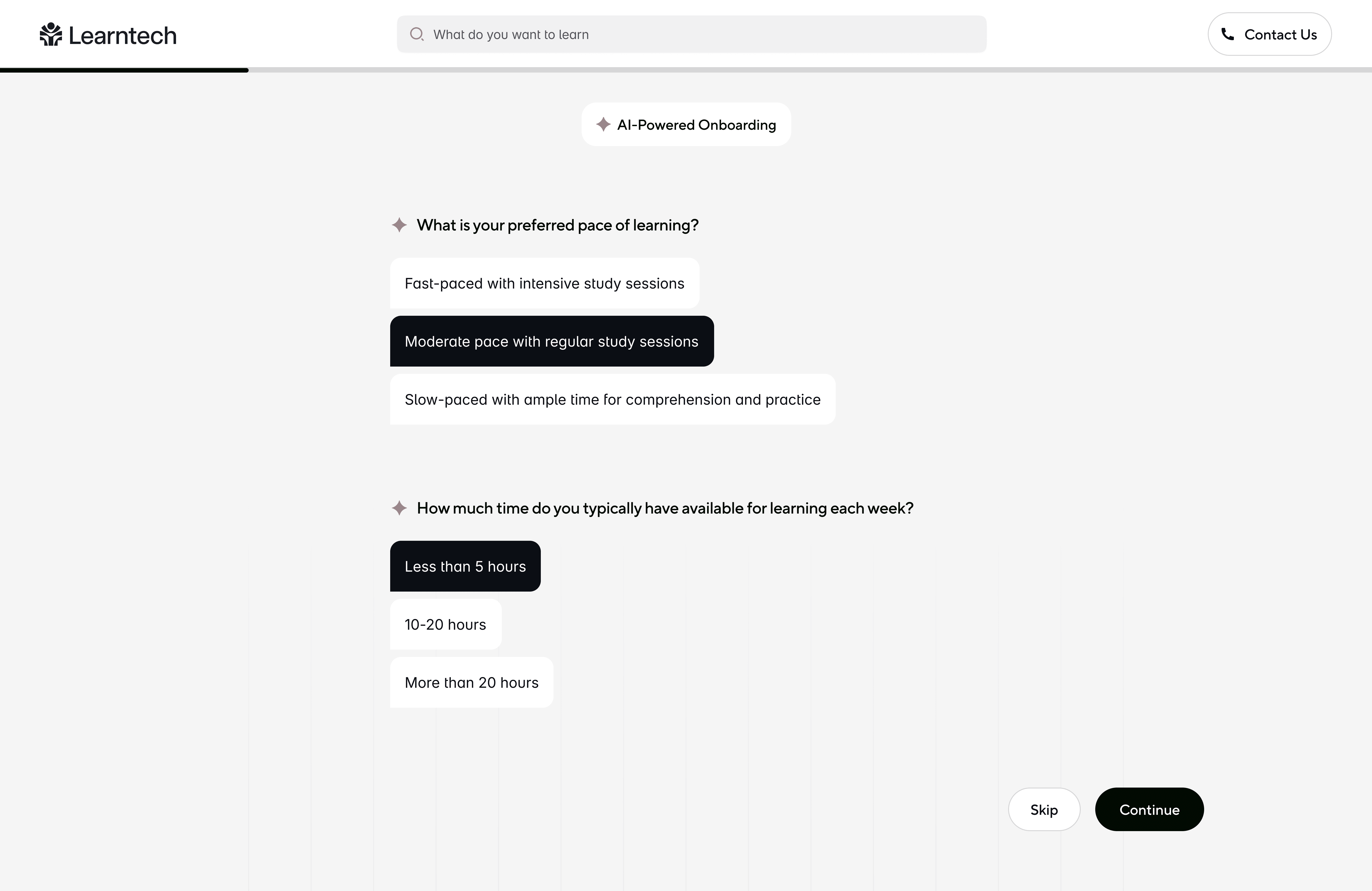
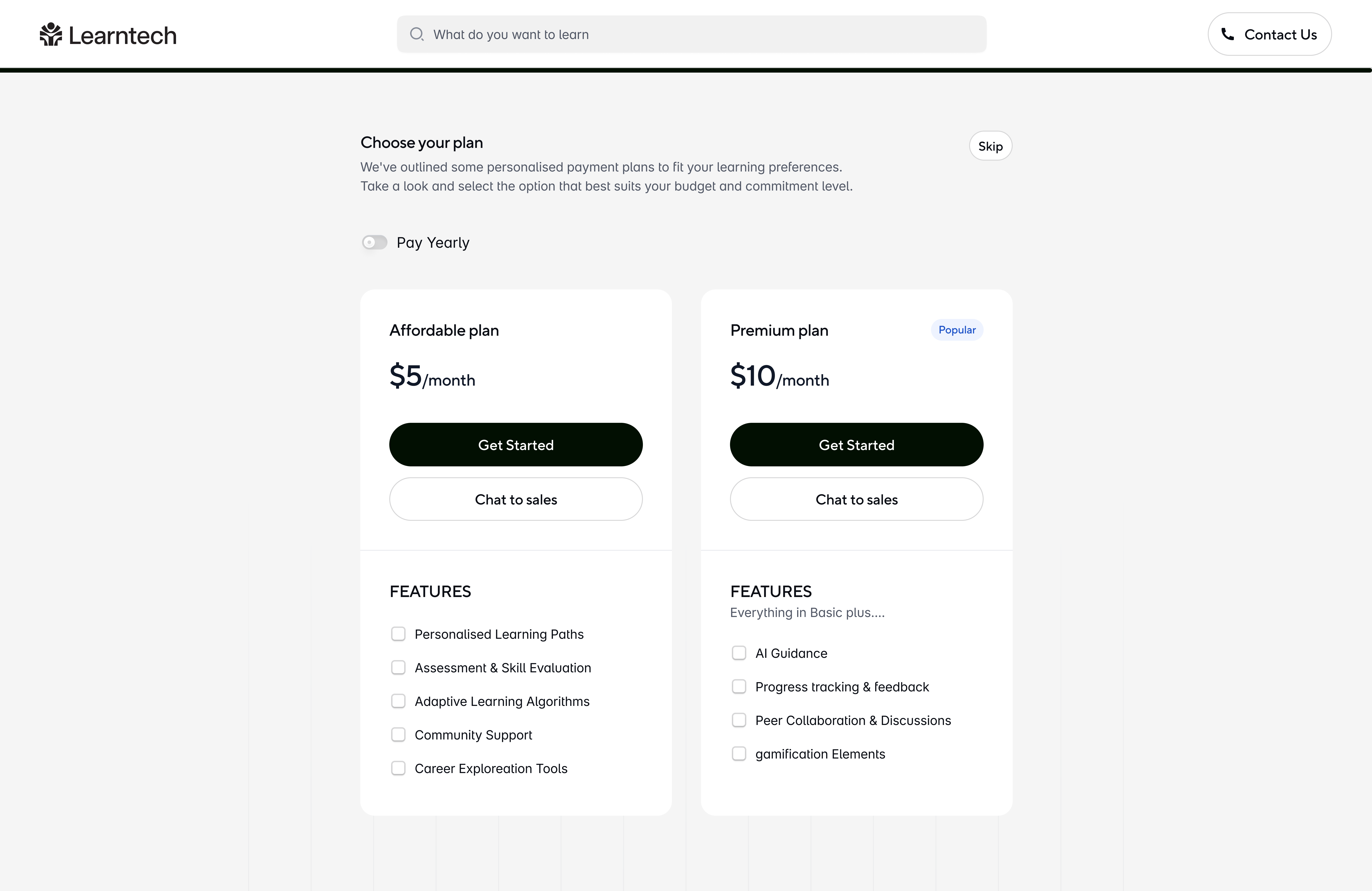
The onboarding experience was redesigned to assess learning goals, preferred learning styles, pacing comfort, and prior knowledge. Instead of a traditional signup flow, onboarding functioned as an intelligent diagnostic that generated personalized learning paths immediately after entry, allowing users to experience relevance from their first session.
Key Decision 1
Redesigned onboarding experience
The onboarding experience was redesigned to assess learning goals, preferred learning styles, pacing comfort, and prior knowledge. Instead of a traditional signup flow, onboarding functioned as an intelligent diagnostic that generated personalized learning paths immediately after entry, allowing users to experience relevance from their first session.
Key Decision 2
Personalized learning paths powered by adaptive algorithms
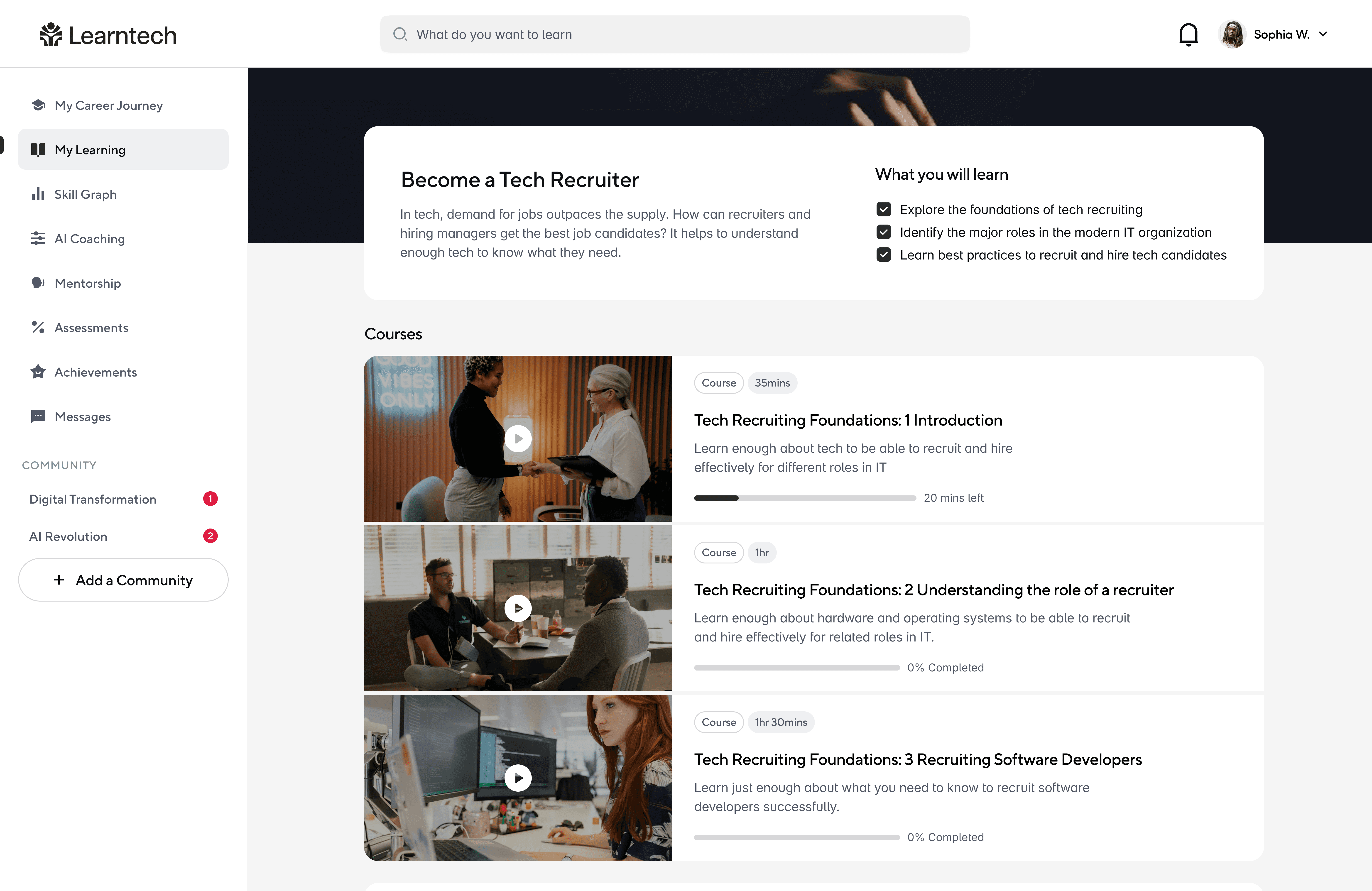
At the core of the platform, I designed personalized learning paths powered by adaptive algorithms. Lessons dynamically adjusted difficulty, sequencing, and reinforcement based on performance signals. The interface communicated adaptation transparently so users understood why their learning journey evolved, increasing trust in the system.
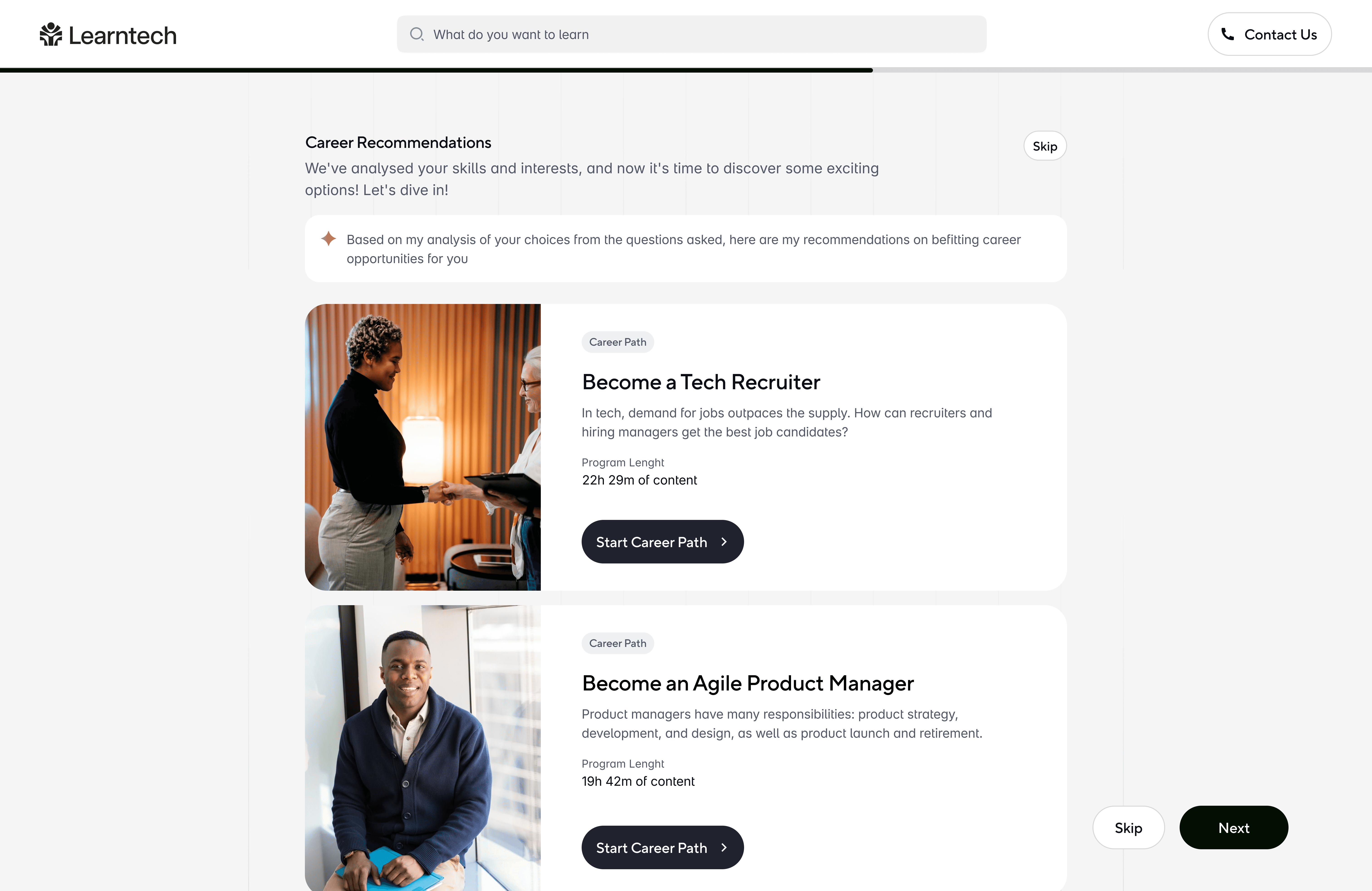
A screenshot of different career paths based on the users' qualities and preferences
Key Decision 3
hybrid COACHING EXPERIENCE
I introduced an AI-enhanced coaching experience that acted as a real-time learning companion. The AI coach provided contextual explanations, encouragement, and recommendations, helping learners overcome friction without leaving their learning flow. To strengthen accountability and depth, I integrated human mentors into the ecosystem, creating a hybrid support model where mentors engaged at strategic milestones rather than replacing automated guidance.
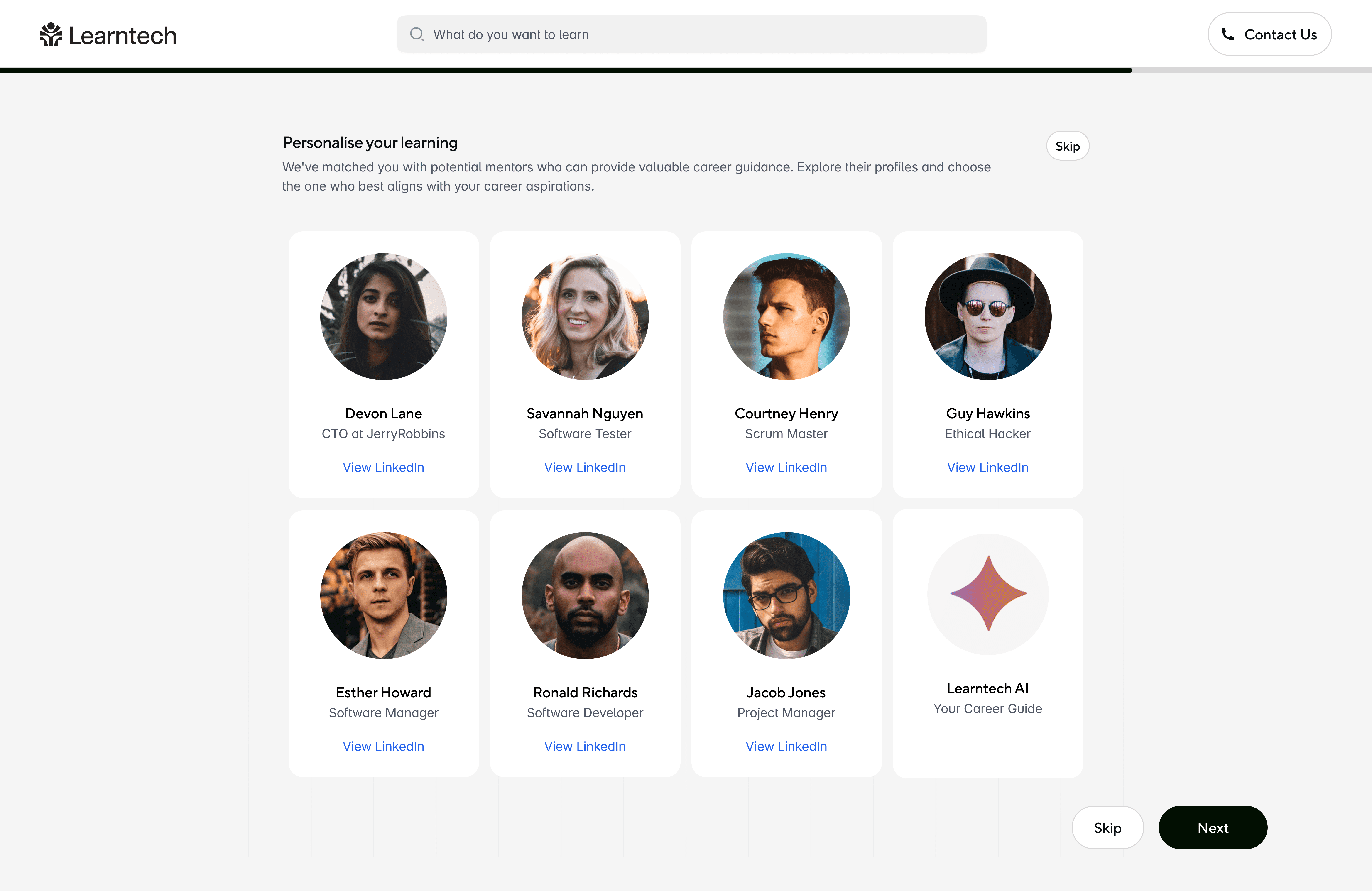
A screenshot showing a list of different human mentors and the Learntech AI coach
Execution Highlights
I led the end-to-end experience design of Learntech as an AI-native learning platform, translating adaptive intelligence into intuitive, motivating, and scalable learning experiences. My focus was on aligning personalization, engagement, and mentorship into an integrated system that improves learning outcomes while supporting long-term product growth.
Designed an adaptive learning intelligence system
Built personalized onboarding & learning path framewokr
Introduced AI coaching integration with human mentorship
Defined the Platform Interaction Model for AI-Driven Learning
KEY TAKEAWAYS
AI SHOULD SUPPORT HUMAN PROGRESS
AI should not simply automate learning but should actively support human progress.
TRANSLATING COMPLEX SYSTEMS INTO CLEAR EXPERIENCIES
By combining AI intelligence, human mentorship, and gamification within a cohesive system, the product aligned learner success with sustainable business growth.
CROSS-COLLABORATION
This project reflects my strength in defining product vision, designing adaptive platforms, and cross-collaborating across engineering, and education domains to deliver scalable AI-driven experiences.
Outcome-Driven Design
Learntech represents the kind of product challenges I’m most passionate about solving - building intelligent systems that empower people to grow while creating durable product ecosystems capable of scaling globally.

Hi
Let's build something meaningful
I’m most excited by teams that value thoughtful execution, strong collaboration, and long-term thinking. If you’re building products that need to scale - in complexity, quality, or ambition - I’m always open to a conversation.
Hire Me :
SAND AI | 2024
LEarntech ai
Onboarding & KYC REDESIGN
Designing an AI-Powered Adaptive Learning Platform for Personalized Education at Scale
Company & product Context
Learntech is an AI-powered digital learning platform built to deliver deeply personalized educational experiences for learners across different ages, skill levels, and learning goals. Unlike traditional online learning platforms that rely on static courses, Learntech uses adaptive intelligence to continuously tailor learning content, pacing, and guidance to each individual user.
The product combines personalized learning paths, AI coaching, human mentorship, adaptive curriculum delivery, and gamified learning mechanics into a unified learning ecosystem.
My Role & Scope
As the lead product designer, I was responsible for defining the end-to-end product experience, shaping the adaptive learning model from a user perspective, and translating complex AI capabilities into intuitive and motivating interactions that support both learner success and long-term platform engagement.
CORE PROBLEM
Most digital learning platforms struggle with retention because they treat learners as a homogeneous audience. Courses are linear, progress is rigid, and users who fall behind or learn differently quickly disengage. Completion rates across online learning products remain low because learners are forced to adapt to the platform instead of the platform adapting to them.
Courses are linear and progress is rigid causing low retention
Completion rates are low because users adapt to platform
Lack of personalization, motivation and sustained progress
No structured guidance for learners
THE DESIGN CHALLENGE
how might we create a learning system that understands each learner, dynamically adjusts learning experiences, and maintains motivation over time while supporting scalable educational delivery?
DISCOVERY FOCUSED ON LEARNING HABITS RATHER THAN COURSE STRUCTURE
Through behavioral research and desk research of habit-formation tools like Habitica, I identified that learners drop off when progress feels unclear, difficulty feels misaligned, or feedback arrives too late. Learners needed immediate reinforcement, adaptive pacing, and a sense of forward momentum.
I mapped learning journeys across beginner, intermediate, and advanced users and discovered that motivation depended heavily on perceived personalization. Users were significantly more engaged when learning felt responsive to their performance rather than predetermined.
key takeaways from QUALITATIVE RESEARCH
Learners drop off when progress feels unclear,
Motivation depended heavily on personalization
Users were significantly more engagung when guided
Educators requested for an opportunity to combine AI with human coaching
EXECUTION
The onboarding experience was redesigned to assess learning goals, preferred learning styles, pacing comfort, and prior knowledge. Instead of a traditional signup flow, onboarding functioned as an intelligent diagnostic that generated personalized learning paths immediately after entry, allowing users to experience relevance from their first session.
Key Decision 1
Redesigned onboarding experience
The onboarding experience was redesigned to assess learning goals, preferred learning styles, pacing comfort, and prior knowledge. Instead of a traditional signup flow, onboarding functioned as an intelligent diagnostic that generated personalized learning paths immediately after entry, allowing users to experience relevance from their first session.
Key Decision 2
Personalized learning paths powered by adaptive algorithms
At the core of the platform, I designed personalized learning paths powered by adaptive algorithms. Lessons dynamically adjusted difficulty, sequencing, and reinforcement based on performance signals. The interface communicated adaptation transparently so users understood why their learning journey evolved, increasing trust in the system.
A screenshot of different career paths based on the users' qualities and preferences
Key Decision 3
hybrid COACHING EXPERIENCE
I introduced an AI-enhanced coaching experience that acted as a real-time learning companion. The AI coach provided contextual explanations, encouragement, and recommendations, helping learners overcome friction without leaving their learning flow. To strengthen accountability and depth, I integrated human mentors into the ecosystem, creating a hybrid support model where mentors engaged at strategic milestones rather than replacing automated guidance.
A screenshot showing a list of different human mentors and the Learntech AI coach
Execution Highlights
I led the end-to-end experience design of Learntech as an AI-native learning platform, translating adaptive intelligence into intuitive, motivating, and scalable learning experiences. My focus was on aligning personalization, engagement, and mentorship into an integrated system that improves learning outcomes while supporting long-term product growth.
Designed an adaptive learning intelligence system
Built personalized onboarding & learning path framewokr
Introduced AI coaching integration with human mentorship
Defined the Platform Interaction Model for AI-Driven Learning
KEY TAKEAWAYS
AI SHOULD SUPPORT HUMAN PROGRESS
AI should not simply automate learning but should actively support human progress.
TRANSLATING COMPLEX SYSTEMS INTO CLEAR EXPERIENCIES
By combining AI intelligence, human mentorship, and gamification within a cohesive system, the product aligned learner success with sustainable business growth.
CROSS-COLLABORATION
This project reflects my strength in defining product vision, designing adaptive platforms, and cross-collaborating across engineering, and education domains to deliver scalable AI-driven experiences.
Outcome-Driven Design
Learntech represents the kind of product challenges I’m most passionate about solving - building intelligent systems that empower people to grow while creating durable product ecosystems capable of scaling globally.
Hi
Let's build something meaningful
I’m most excited by teams that value thoughtful execution, strong collaboration, and long-term thinking. If you’re building products that need to scale - in complexity, quality, or ambition - I’m always open to a conversation.
Hire Me :
SAND AI | 2024
LEarntech ai
Onboarding & KYC REDESIGN
Designing an AI-Powered Adaptive Learning Platform for Personalized Education at Scale
Company & product Context
Learntech is an AI-powered digital learning platform built to deliver deeply personalized educational experiences for learners across different ages, skill levels, and learning goals. Unlike traditional online learning platforms that rely on static courses, Learntech uses adaptive intelligence to continuously tailor learning content, pacing, and guidance to each individual user.
The product combines personalized learning paths, AI coaching, human mentorship, adaptive curriculum delivery, and gamified learning mechanics into a unified learning ecosystem.
My Role & Scope
As the lead product designer, I was responsible for defining the end-to-end product experience, shaping the adaptive learning model from a user perspective, and translating complex AI capabilities into intuitive and motivating interactions that support both learner success and long-term platform engagement.
CORE PROBLEM
Most digital learning platforms struggle with retention because they treat learners as a homogeneous audience. Courses are linear, progress is rigid, and users who fall behind or learn differently quickly disengage. Completion rates across online learning products remain low because learners are forced to adapt to the platform instead of the platform adapting to them.
Courses are linear and progress is rigid causing low retention
Completion rates are low because users adapt to platform
Lack of personalization, motivation and sustained progress
No structured guidance for learners
THE DESIGN CHALLENGE
how might we create a learning system that understands each learner, dynamically adjusts learning experiences, and maintains motivation over time while supporting scalable educational delivery?
DISCOVERY FOCUSED ON LEARNING HABITS RATHER THAN COURSE STRUCTURE
Through behavioral research and desk research of habit-formation tools like Habitica, I identified that learners drop off when progress feels unclear, difficulty feels misaligned, or feedback arrives too late. Learners needed immediate reinforcement, adaptive pacing, and a sense of forward momentum.
I mapped learning journeys across beginner, intermediate, and advanced users and discovered that motivation depended heavily on perceived personalization. Users were significantly more engaged when learning felt responsive to their performance rather than predetermined.
key takeaways from QUALITATIVE RESEARCH
Learners drop off when progress feels unclear,
Motivation depended heavily on personalization
Users were significantly more engagung when guided
Educators requested for an opportunity to combine AI with human coaching
EXECUTION
The onboarding experience was redesigned to assess learning goals, preferred learning styles, pacing comfort, and prior knowledge. Instead of a traditional signup flow, onboarding functioned as an intelligent diagnostic that generated personalized learning paths immediately after entry, allowing users to experience relevance from their first session.
Key Decision 1
Redesigned onboarding experience
The onboarding experience was redesigned to assess learning goals, preferred learning styles, pacing comfort, and prior knowledge. Instead of a traditional signup flow, onboarding functioned as an intelligent diagnostic that generated personalized learning paths immediately after entry, allowing users to experience relevance from their first session.
Key Decision 2
Personalized learning paths powered by adaptive algorithms
At the core of the platform, I designed personalized learning paths powered by adaptive algorithms. Lessons dynamically adjusted difficulty, sequencing, and reinforcement based on performance signals. The interface communicated adaptation transparently so users understood why their learning journey evolved, increasing trust in the system.
A screenshot of different career paths based on the users' qualities and preferences
Key Decision 3
hybrid COACHING EXPERIENCE
I introduced an AI-enhanced coaching experience that acted as a real-time learning companion. The AI coach provided contextual explanations, encouragement, and recommendations, helping learners overcome friction without leaving their learning flow. To strengthen accountability and depth, I integrated human mentors into the ecosystem, creating a hybrid support model where mentors engaged at strategic milestones rather than replacing automated guidance.
A screenshot showing a list of different human mentors and the Learntech AI coach
Execution Highlights
I led the end-to-end experience design of Learntech as an AI-native learning platform, translating adaptive intelligence into intuitive, motivating, and scalable learning experiences. My focus was on aligning personalization, engagement, and mentorship into an integrated system that improves learning outcomes while supporting long-term product growth.
Designed an adaptive learning intelligence system
Built personalized onboarding & learning path framewokr
Introduced AI coaching integration with human mentorship
Defined the Platform Interaction Model for AI-Driven Learning
KEY TAKEAWAYS
AI SHOULD SUPPORT HUMAN PROGRESS
AI should not simply automate learning but should actively support human progress.
TRANSLATING COMPLEX SYSTEMS INTO CLEAR EXPERIENCIES
By combining AI intelligence, human mentorship, and gamification within a cohesive system, the product aligned learner success with sustainable business growth.
CROSS-COLLABORATION
This project reflects my strength in defining product vision, designing adaptive platforms, and cross-collaborating across engineering, and education domains to deliver scalable AI-driven experiences.
Outcome-Driven Design
Learntech represents the kind of product challenges I’m most passionate about solving - building intelligent systems that empower people to grow while creating durable product ecosystems capable of scaling globally.
Let's build something meaningful
I’m most excited by teams that value thoughtful execution, strong collaboration, and long-term thinking. If you’re building products that need to scale - in complexity, quality, or ambition - I’m always open to a conversation.
Hire Me :