RELIANCE HEALTH | 2025
Claims Management
Onboarding & KYC REDESIGN
Led the design of a product that builds efficiency and automates the claims management, leading to a 75% reduction in claims resolution time
Company & product Context
Reliance Health operates a large-scale healthcare insurance platform where timely and accurate claims processing is critical to provider trust, regulatory compliance, and financial sustainability. At the time of this project, claims adjudication relied heavily on manual coordination through external tools, leading to inefficiencies and SLA risks.
Manual adjudication workflows required claim executives to spend significant daily effort distributing claims via Microsoft Teams, creating bottlenecks and reducing processing capacity and constraining the company’s ability to meet its 30-day payment SLA and limited operational scalability.
My Role & Scope
As the director of research and design, I led the experience strategy and system design for the Claims Task Management platform, aligning operations, compliance, and engineering around a unified workflow.
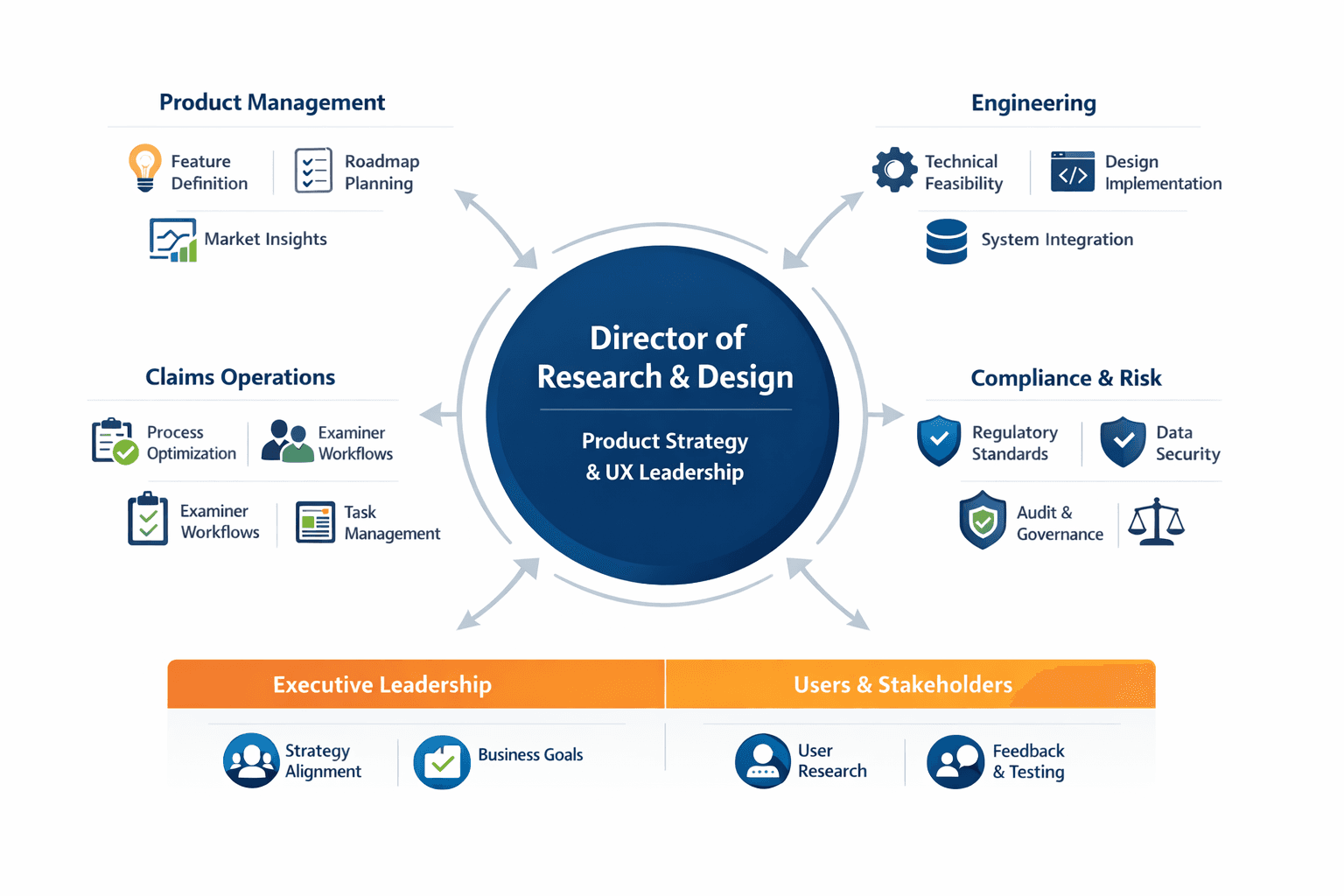
A map showing my ownership and collaboration across product, engineering, growth, data, support and the executive office
EXECUTION
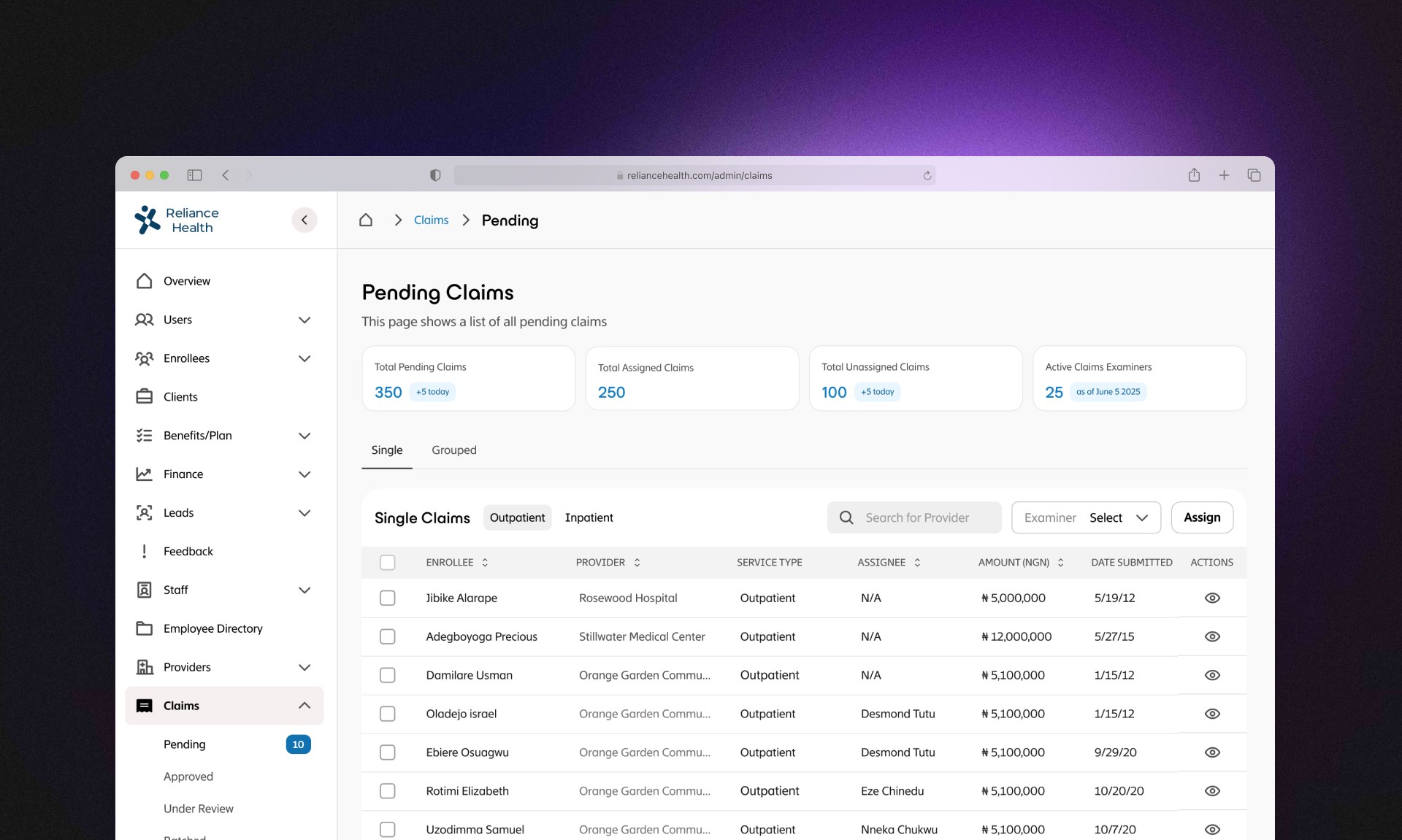
I designed a centralized “Tasks” module within the Admin Dashboard with standardized columns, filters, and status indicators, transforming task management into a reusable operational layer
BUSINESS Problem
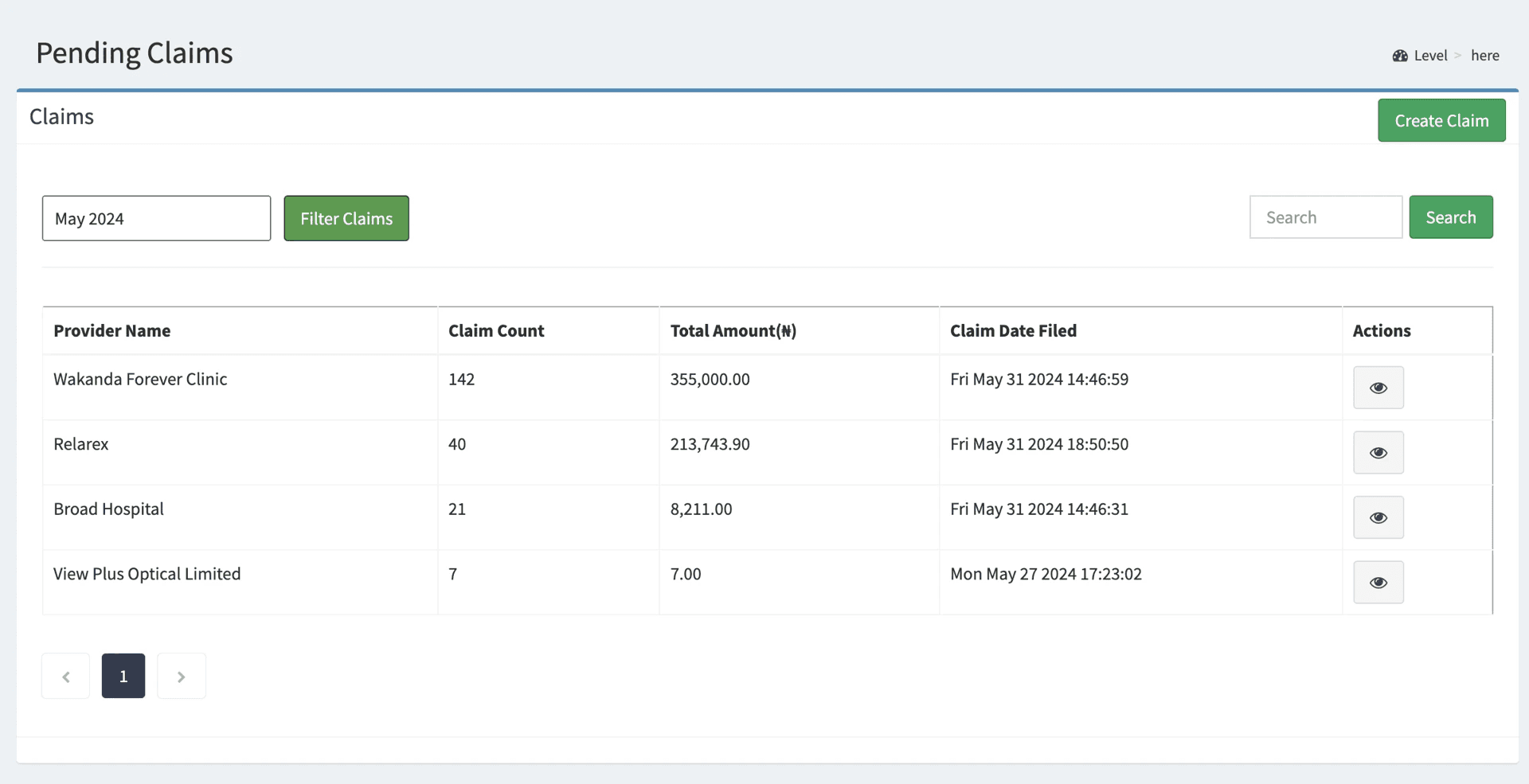
Claims distribution and tracking were handled manually, consuming approximately 20 minutes daily per executive and introducing delays and inconsistency. This created operational inefficiencies, increased SLA risk, and limited throughput as volume grew. Fragmented assignment processes and lack of visibility made it difficult to balance workloads, respond to urgent provider requests, and ensure regulatory timelines were met.
Current claims interface showing lack of ownership
A map showing my ownership and collaboration across product, engineering, growth, data, and support
User Problem
Claim executives lacked an efficient way to assign, monitor, and rebalance workloads. Claim examiners struggled to quickly identify assigned claims and prioritize work, often switching between communication tools and dashboards. The system provided limited feedback, low transparency, and poor recovery paths, leading to frustration and dependency on manual coordination.
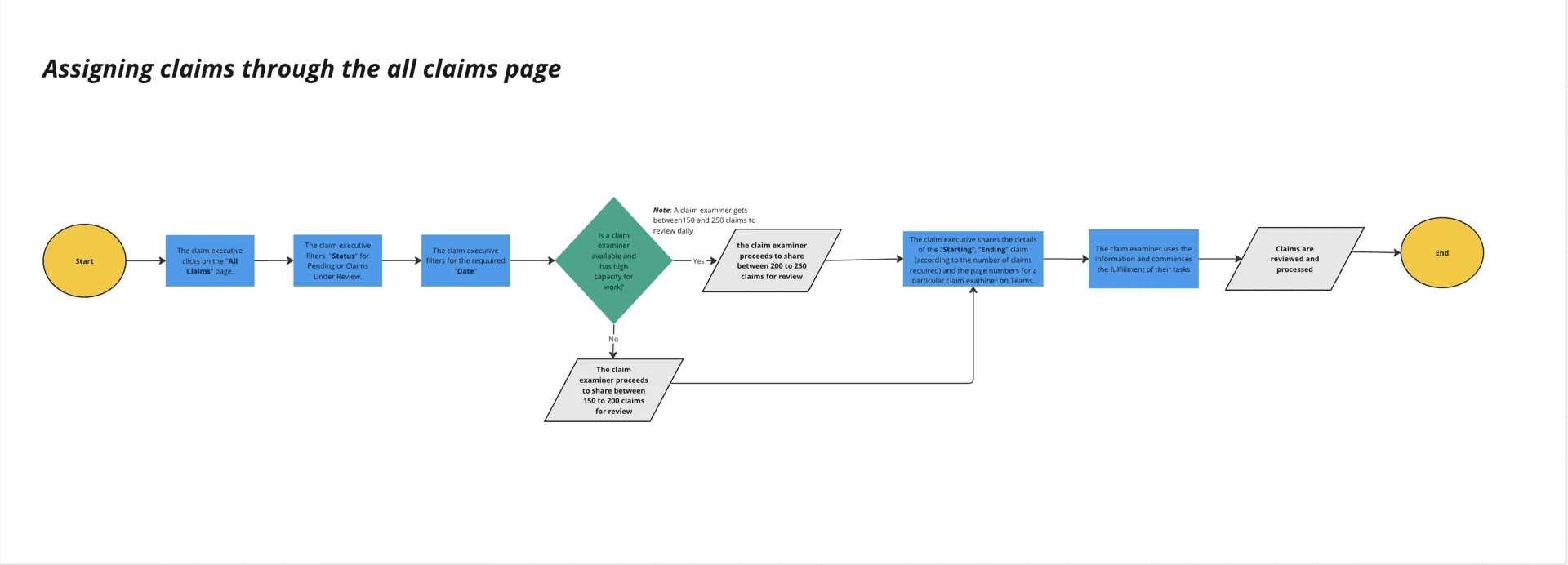
20+ mins daily manual coordination
A map showing my ownership and collaboration across product, engineering, growth, data, and support
Success Criteria
Success was defined by reducing assignment time from 20 minutes to 5 minutes daily, improving processing efficiency, ensuring FIFO compliance, and enabling reliable tracking and reassignment of tasks
Reduce claims assignment from 20 to 5minutes
Automate the claims creation process
Inconsistent icon library
No defined component structure
Non-existing collaboration workflows for engineers
How I de-risked the work
I led discovery sessions through analysis of operational workflows, stakeholder interviews with claims leadership, review of support escalations, and mapping of existing claims submission, review and approval/rejection flows. These insights informed a shift from ad-hoc coordination to rule-driven task orchestration.
key insights from experience mapping
Assignment workflows were fragmented across tools and teams.
Cognitive overhead was high due to manual prioritization.
Lack of system-enforced rules weakened SLA compliance.
No defined collaboration process with providers
Availability of examiners were not reflected in tooling.
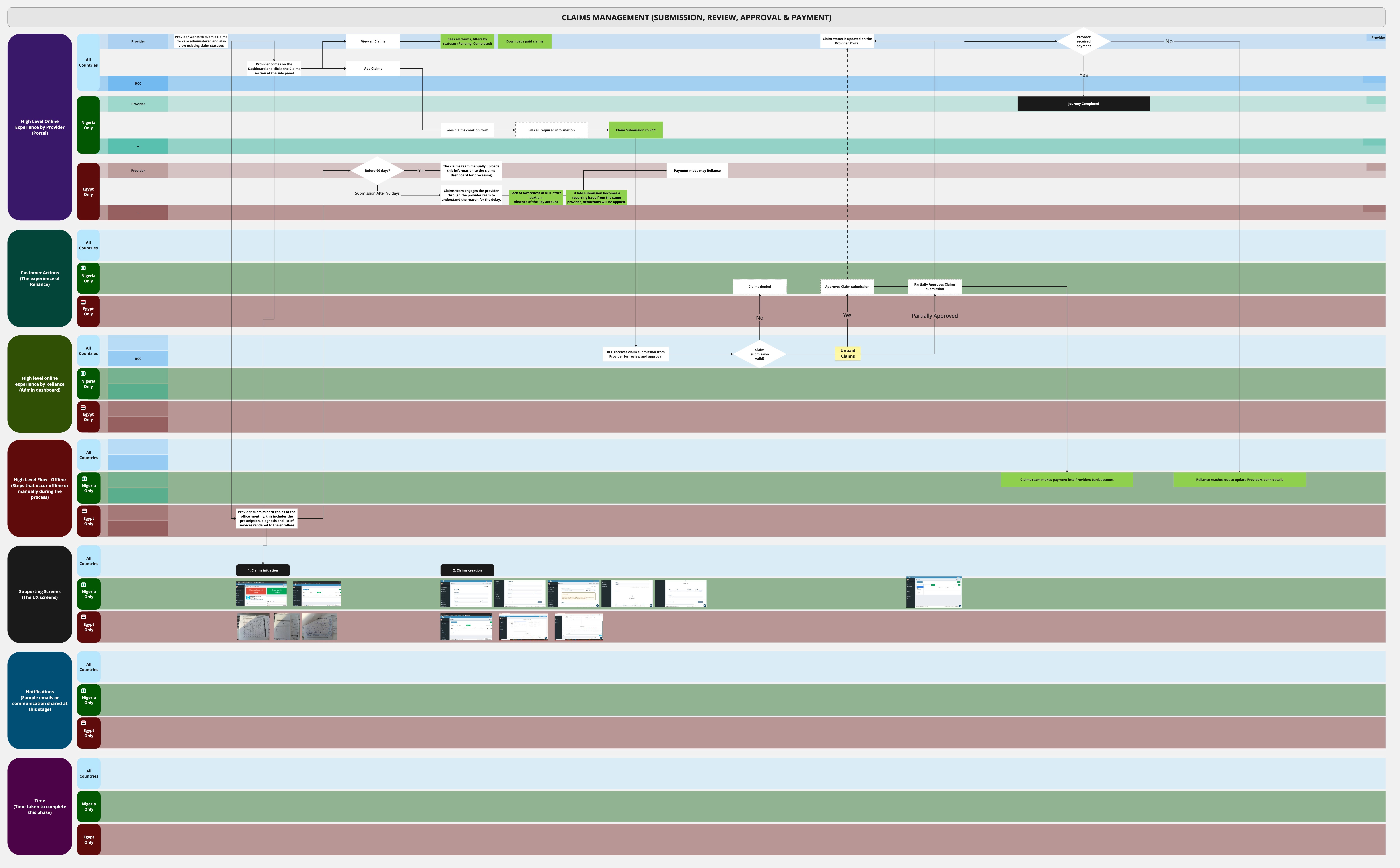
Experience mapping of the current claims process from submission to paument
A map showing my ownership and collaboration across product, engineering, growth, data, and support
Key Decision 1
Redesigning the Experience Architecture
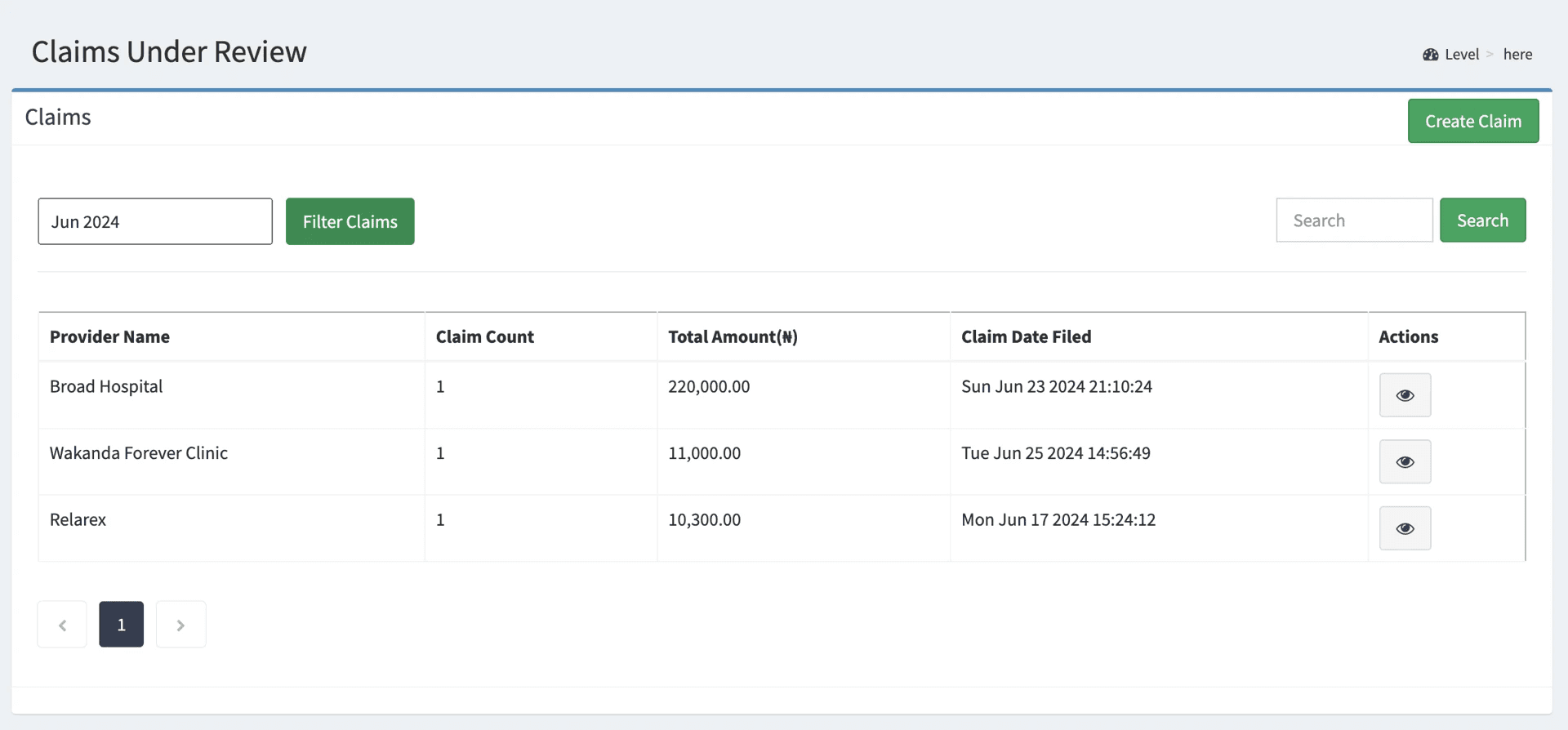
I designed an end-to-end task management framework covering assignment, reassignment, filtering, and completion states across “Pending,” “Under Review,” “Approved,” and “Batched” claims
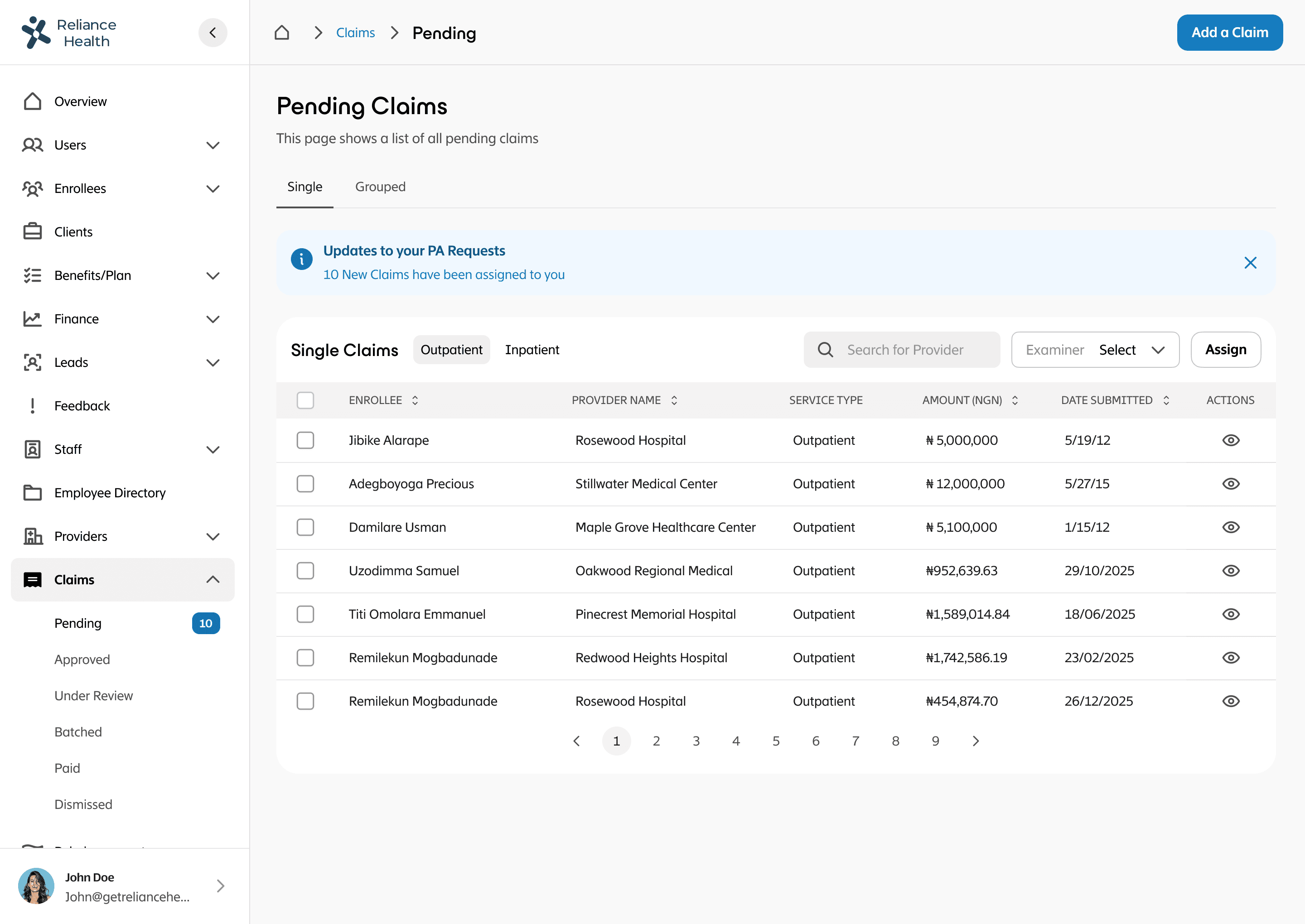
A screenshot of user activity including recordings of user actions
Key Decision 2
Delivered a unified operational platform for fragmented workflows
I built a scalable claims operations system with automated claim creation and routing, standardized review pipelines, and real-time assignment tracking to improve visibility, accountability, and workload management. I also designed a maker-checker approval model and role-based access controls that clearly separated examiner and executive responsibilities, strengthening compliance, reducing risk, and enabling efficient, governed processing at scale.
A screenshot of user activity including recordings of user actions
Key Decision 3
High-Quality Interaction Design
I introduced bulk assignment patterns, inline filtering, transparent status tags, and contextual actions to reduce friction and improve speed. Notification and feedback loops were integrated to reinforce task ownership and accountability.
A video showing bulk claims task assignment
Key Decision 4
Cross-functional leadership
I partnered closely with Product, Engineering, Compliance, and Operations leadership to align automation logic, governance rules, and workload models.
I facilitated structured reviews around approval hierarchies, role boundaries, and risk scenarios, ensuring that the system reflected both regulatory obligations and real operational behavior.
Shared dashboards, documentation, and delivery plans created alignment and reduced late-stage conflicts.
I partnered closely with Product, Engineering, Compliance, and Operations leadership to align automation logic, governance rules, and workload models. I facilitated structured reviews around approval hierarchies, role boundaries, and risk scenarios, ensuring that the system reflected both regulatory obligations and real operational behavior.
Shared dashboards, documentation, and delivery plans created alignment and reduced late-stage conflicts.
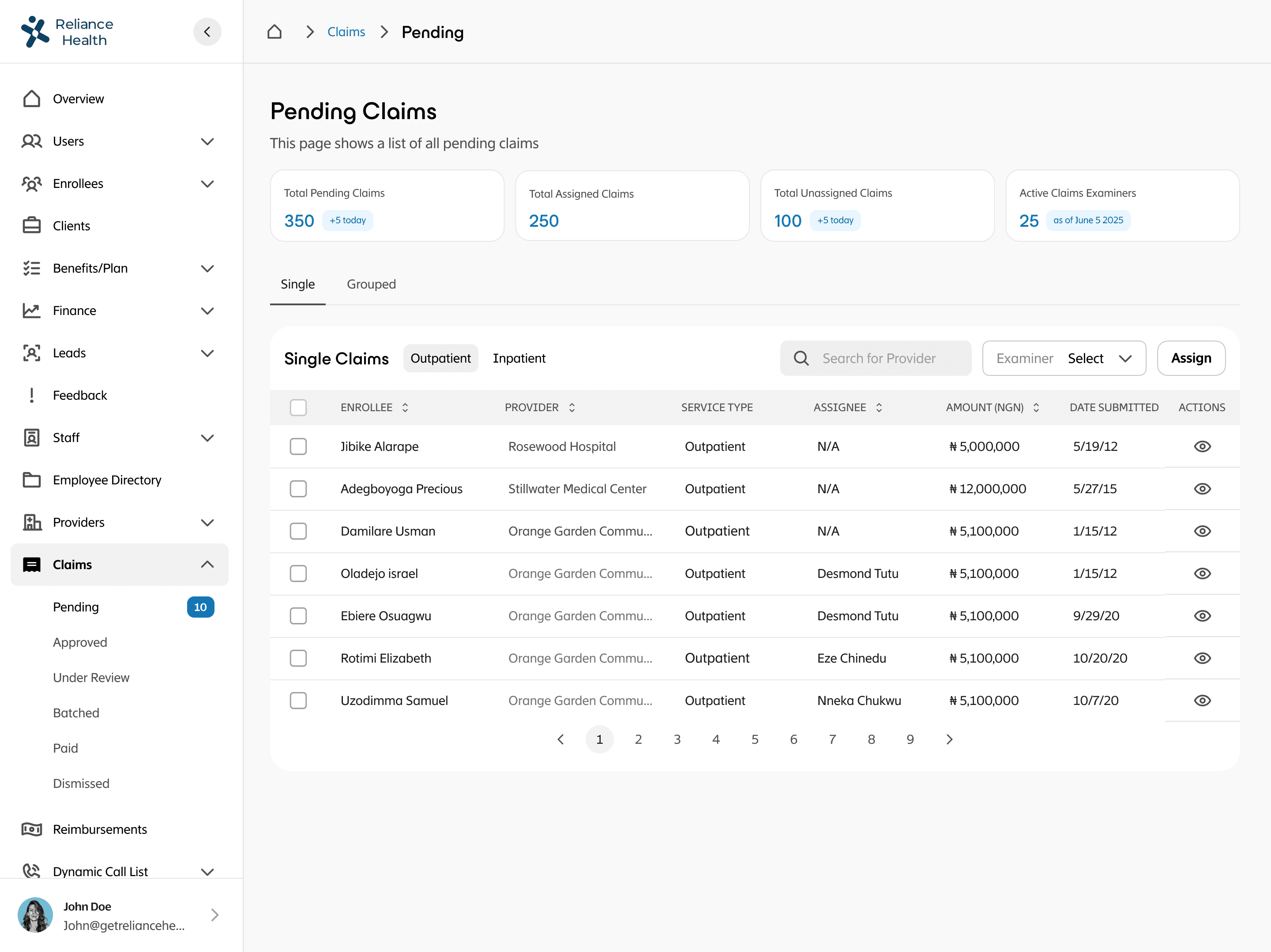
An image of the total number of pending claims across different status
Execution Highlights
We delivered the platform in phases, beginning with automated assignment and review workflows, followed by approval controls, tracking systems, and role-based experiences.
Each phase was validated through internal pilots and post-release analytics. I led continuous improvement cycles based on performance data, examiner feedback, and compliance reviews.
Reduced daily claim assignment time from ~20 minutes to ~5 minutes
Automate the claims creation process
Lowered dependency on external communication tools
Established a scalable claims operations platform
Reduced operational and compliance risk
Created foundation for data-driven performance monitoring
KEY TAKEAWAYS
STRATEGIC VALUE
I converted fragmented operational processes into a governed, rule-driven platform aligned with business and regulatory goals.
PLATFORM OWNERSHIP
Rather than designing isolated screens, I built an extensible task orchestration layer embedded in the admin ecosystem.
TRUST & RELIABILITY
By enforcing FIFO, visibility, and notifications, I strengthened trust between operations, providers, and leadership.
Outcome-Driven Design
Every major design decision was tied to measurable improvements in efficiency, compliance, and scale.

Hi
Let's build something meaningful
I’m most excited by teams that value thoughtful execution, strong collaboration, and long-term thinking. If you’re building products that need to scale - in complexity, quality, or ambition - I’m always open to a conversation.
Hire Me :
RELIANCE HEALTH | 2025
Claims Management
Onboarding & KYC REDESIGN
Led the design of a product that builds efficiency and automates the claims management, leading to a 75% reduction in claims resolution time
Company & product Context
Reliance Health operates a large-scale healthcare insurance platform where timely and accurate claims processing is critical to provider trust, regulatory compliance, and financial sustainability. At the time of this project, claims adjudication relied heavily on manual coordination through external tools, leading to inefficiencies and SLA risks.
Manual adjudication workflows required claim executives to spend significant daily effort distributing claims via Microsoft Teams, creating bottlenecks and reducing processing capacity and constraining the company’s ability to meet its 30-day payment SLA and limited operational scalability.
My Role & Scope
As the director of research and design, I led the experience strategy and system design for the Claims Task Management platform, aligning operations, compliance, and engineering around a unified workflow.
A map showing my ownership and collaboration across product, engineering, growth, data, support and the executive office
EXECUTION
I designed a centralized “Tasks” module within the Admin Dashboard with standardized columns, filters, and status indicators, transforming task management into a reusable operational layer
BUSINESS Problem
Claims distribution and tracking were handled manually, consuming approximately 20 minutes daily per executive and introducing delays and inconsistency. This created operational inefficiencies, increased SLA risk, and limited throughput as volume grew. Fragmented assignment processes and lack of visibility made it difficult to balance workloads, respond to urgent provider requests, and ensure regulatory timelines were met.
Current claims interface showing lack of ownership
A map showing my ownership and collaboration across product, engineering, growth, data, and support
User Problem
Claim executives lacked an efficient way to assign, monitor, and rebalance workloads. Claim examiners struggled to quickly identify assigned claims and prioritize work, often switching between communication tools and dashboards. The system provided limited feedback, low transparency, and poor recovery paths, leading to frustration and dependency on manual coordination.
20+ mins daily manual coordination
A map showing my ownership and collaboration across product, engineering, growth, data, and support
Success Criteria
Success was defined by reducing assignment time from 20 minutes to 5 minutes daily, improving processing efficiency, ensuring FIFO compliance, and enabling reliable tracking and reassignment of tasks
Reduce claims assignment from 20 to 5minutes
Automate the claims creation process
Inconsistent icon library
No defined component structure
Non-existing collaboration workflows for engineers
How I de-risked the work
I led discovery sessions through analysis of operational workflows, stakeholder interviews with claims leadership, review of support escalations, and mapping of existing claims submission, review and approval/rejection flows. These insights informed a shift from ad-hoc coordination to rule-driven task orchestration.
key insights from experience mapping
Assignment workflows were fragmented across tools and teams.
Cognitive overhead was high due to manual prioritization.
Lack of system-enforced rules weakened SLA compliance.
No defined collaboration process with providers
Availability of examiners were not reflected in tooling.
Experience mapping of the current claims process from submission to paument
A map showing my ownership and collaboration across product, engineering, growth, data, and support
Key Decision 1
Redesigning the Experience Architecture
I designed an end-to-end task management framework covering assignment, reassignment, filtering, and completion states across “Pending,” “Under Review,” “Approved,” and “Batched” claims
A screenshot of user activity including recordings of user actions
Key Decision 2
Delivered a unified operational platform for fragmented workflows
I built a scalable claims operations system with automated claim creation and routing, standardized review pipelines, and real-time assignment tracking to improve visibility, accountability, and workload management. I also designed a maker-checker approval model and role-based access controls that clearly separated examiner and executive responsibilities, strengthening compliance, reducing risk, and enabling efficient, governed processing at scale.
A screenshot of user activity including recordings of user actions
Key Decision 3
High-Quality Interaction Design
I introduced bulk assignment patterns, inline filtering, transparent status tags, and contextual actions to reduce friction and improve speed. Notification and feedback loops were integrated to reinforce task ownership and accountability.
A video showing bulk claims task assignment
Key Decision 4
Cross-functional leadership
I partnered closely with Product, Engineering, Compliance, and Operations leadership to align automation logic, governance rules, and workload models.
I facilitated structured reviews around approval hierarchies, role boundaries, and risk scenarios, ensuring that the system reflected both regulatory obligations and real operational behavior.
Shared dashboards, documentation, and delivery plans created alignment and reduced late-stage conflicts.
I partnered closely with Product, Engineering, Compliance, and Operations leadership to align automation logic, governance rules, and workload models. I facilitated structured reviews around approval hierarchies, role boundaries, and risk scenarios, ensuring that the system reflected both regulatory obligations and real operational behavior.
Shared dashboards, documentation, and delivery plans created alignment and reduced late-stage conflicts.
An image of the total number of pending claims across different status
Execution Highlights
We delivered the platform in phases, beginning with automated assignment and review workflows, followed by approval controls, tracking systems, and role-based experiences.
Each phase was validated through internal pilots and post-release analytics. I led continuous improvement cycles based on performance data, examiner feedback, and compliance reviews.
Reduced daily claim assignment time from ~20 minutes to ~5 minutes
Automate the claims creation process
Lowered dependency on external communication tools
Established a scalable claims operations platform
Reduced operational and compliance risk
Created foundation for data-driven performance monitoring
KEY TAKEAWAYS
STRATEGIC VALUE
I converted fragmented operational processes into a governed, rule-driven platform aligned with business and regulatory goals.
PLATFORM OWNERSHIP
Rather than designing isolated screens, I built an extensible task orchestration layer embedded in the admin ecosystem.
TRUST & RELIABILITY
By enforcing FIFO, visibility, and notifications, I strengthened trust between operations, providers, and leadership.
Outcome-Driven Design
Every major design decision was tied to measurable improvements in efficiency, compliance, and scale.
Hi
Let's build something meaningful
I’m most excited by teams that value thoughtful execution, strong collaboration, and long-term thinking. If you’re building products that need to scale - in complexity, quality, or ambition - I’m always open to a conversation.
Hire Me :
RELIANCE HEALTH | 2025
Claims Management
Onboarding & KYC REDESIGN
Led the design of a product that builds efficiency and automates the claims management, leading to a 75% reduction in claims resolution time
Company & product Context
Reliance Health operates a large-scale healthcare insurance platform where timely and accurate claims processing is critical to provider trust, regulatory compliance, and financial sustainability. At the time of this project, claims adjudication relied heavily on manual coordination through external tools, leading to inefficiencies and SLA risks.
Manual adjudication workflows required claim executives to spend significant daily effort distributing claims via Microsoft Teams, creating bottlenecks and reducing processing capacity and constraining the company’s ability to meet its 30-day payment SLA and limited operational scalability.
My Role & Scope
As the director of research and design, I led the experience strategy and system design for the Claims Task Management platform, aligning operations, compliance, and engineering around a unified workflow.
A map showing my ownership and collaboration across product, engineering, growth, data, support and the executive office
EXECUTION
I designed a centralized “Tasks” module within the Admin Dashboard with standardized columns, filters, and status indicators, transforming task management into a reusable operational layer
BUSINESS Problem
Claims distribution and tracking were handled manually, consuming approximately 20 minutes daily per executive and introducing delays and inconsistency. This created operational inefficiencies, increased SLA risk, and limited throughput as volume grew. Fragmented assignment processes and lack of visibility made it difficult to balance workloads, respond to urgent provider requests, and ensure regulatory timelines were met.
Current claims interface showing lack of ownership
A map showing my ownership and collaboration across product, engineering, growth, data, and support
User Problem
Claim executives lacked an efficient way to assign, monitor, and rebalance workloads. Claim examiners struggled to quickly identify assigned claims and prioritize work, often switching between communication tools and dashboards. The system provided limited feedback, low transparency, and poor recovery paths, leading to frustration and dependency on manual coordination.
20+ mins daily manual coordination
A map showing my ownership and collaboration across product, engineering, growth, data, and support
Success Criteria
Success was defined by reducing assignment time from 20 minutes to 5 minutes daily, improving processing efficiency, ensuring FIFO compliance, and enabling reliable tracking and reassignment of tasks
Reduce claims assignment from 20 to 5minutes
Automate the claims creation process
Inconsistent icon library
No defined component structure
Non-existing collaboration workflows for engineers
How I de-risked the work
I led discovery sessions through analysis of operational workflows, stakeholder interviews with claims leadership, review of support escalations, and mapping of existing claims submission, review and approval/rejection flows. These insights informed a shift from ad-hoc coordination to rule-driven task orchestration.
key insights from experience mapping
Assignment workflows were fragmented across tools and teams.
Cognitive overhead was high due to manual prioritization.
Lack of system-enforced rules weakened SLA compliance.
No defined collaboration process with providers
Availability of examiners were not reflected in tooling.
Experience mapping of the current claims process from submission to paument
A map showing my ownership and collaboration across product, engineering, growth, data, and support
Key Decision 1
Redesigning the Experience Architecture
I designed an end-to-end task management framework covering assignment, reassignment, filtering, and completion states across “Pending,” “Under Review,” “Approved,” and “Batched” claims
A screenshot of user activity including recordings of user actions
Key Decision 2
Delivered a unified operational platform for fragmented workflows
I built a scalable claims operations system with automated claim creation and routing, standardized review pipelines, and real-time assignment tracking to improve visibility, accountability, and workload management. I also designed a maker-checker approval model and role-based access controls that clearly separated examiner and executive responsibilities, strengthening compliance, reducing risk, and enabling efficient, governed processing at scale.
A screenshot of user activity including recordings of user actions
Key Decision 3
High-Quality Interaction Design
I introduced bulk assignment patterns, inline filtering, transparent status tags, and contextual actions to reduce friction and improve speed. Notification and feedback loops were integrated to reinforce task ownership and accountability.
A video showing bulk claims task assignment
Key Decision 4
Cross-functional leadership
I partnered closely with Product, Engineering, Compliance, and Operations leadership to align automation logic, governance rules, and workload models.
I facilitated structured reviews around approval hierarchies, role boundaries, and risk scenarios, ensuring that the system reflected both regulatory obligations and real operational behavior.
Shared dashboards, documentation, and delivery plans created alignment and reduced late-stage conflicts.
I partnered closely with Product, Engineering, Compliance, and Operations leadership to align automation logic, governance rules, and workload models. I facilitated structured reviews around approval hierarchies, role boundaries, and risk scenarios, ensuring that the system reflected both regulatory obligations and real operational behavior.
Shared dashboards, documentation, and delivery plans created alignment and reduced late-stage conflicts.
An image of the total number of pending claims across different status
Execution Highlights
We delivered the platform in phases, beginning with automated assignment and review workflows, followed by approval controls, tracking systems, and role-based experiences.
Each phase was validated through internal pilots and post-release analytics. I led continuous improvement cycles based on performance data, examiner feedback, and compliance reviews.
Reduced daily claim assignment time from ~20 minutes to ~5 minutes
Automate the claims creation process
Lowered dependency on external communication tools
Established a scalable claims operations platform
Reduced operational and compliance risk
Created foundation for data-driven performance monitoring
KEY TAKEAWAYS
STRATEGIC VALUE
I converted fragmented operational processes into a governed, rule-driven platform aligned with business and regulatory goals.
PLATFORM OWNERSHIP
Rather than designing isolated screens, I built an extensible task orchestration layer embedded in the admin ecosystem.
TRUST & RELIABILITY
By enforcing FIFO, visibility, and notifications, I strengthened trust between operations, providers, and leadership.
Outcome-Driven Design
Every major design decision was tied to measurable improvements in efficiency, compliance, and scale.
Let's build something meaningful
I’m most excited by teams that value thoughtful execution, strong collaboration, and long-term thinking. If you’re building products that need to scale - in complexity, quality, or ambition - I’m always open to a conversation.
Hire Me :